Monday, August 26, 2024

Desert Places

Bible in a Year : Psalm 119:89-176, 1 Corinthians 8

The Lord . . . has watched over your journey through this vast wilderness.

Deuteronomy 2:7

Today's Scripture & Insight : Deuteronomy 2:1-7

When I was a young believer, I thought “mountaintop” experiences were where I would meet Jesus. But those highs rarely lasted or led to growth. Author Lina AbuJamra says it’s in the desert places where we meet God and grow. In her Bible study Through the Desert, she writes, “God’s aim is to use the desert places in our lives to make us stronger.” She continues, “God’s goodness is meant to be received in the midst of your pain, not proven by the absence of pain.”

It’s in the hard places of sorrow, loss, and pain that God helps us to grow in our faith and become closer to Him. As Lina learned, “The desert is not an oversight in God’s plan but an integral part of [our] growth process.”

God led many Old Testament patriarchs to the desert. Abraham, Isaac, and Jacob all had wilderness experiences. It was in the desert that God prepared Moses’ heart and called him to lead His people out of slavery (Exodus 3:1-2, 9-10). And it was in the desert that God “watched over [the Israelites’] journey” for forty years with His help and guidance (Deuteronomy 2:7).

God was with Moses and the Israelites each step of their way through the desert, and He’s with you and me in ours. In the desert, we learn to rely on God. There He meets us—and there we grow.

By: Alyson Kieda

Reflect & Pray

When has God met you in a desert place? What happened as a result?

Dear God, thank You for being with me in the difficult desert experiences of my life. You’re faithful and compassionate.


https://www.dailydevotionalsonline.com/our-daily-bread-topic.php?id=13340&&topic=Desert-Places


A leader with trust in God

Joshua was old, advanced in age. And Joshua called for all Israel … and said to them: … You have seen all that the Lord your God has done to all these nations because of you, for the Lord your God is He who has fought for you.

Joshua 23:1–3

A leader with trust in God

Joshua is one of the greatest leaders of the old covenant people of Israel, a man distinguished in many ways. Next to God, Israel owed to him the capture of the land of Canaan, which God had already promised to the forefathers of His people.

Now the life of this gifted leader is drawing to a close, and he is handing over his testament, as it were, to his people. This is so significant that it has been recorded in the Holy Scriptures.

Naturally, he begins with the past, which he himself had played a major role in shaping. Would he succumb to the temptation to emphasise his merits or at least mention them? You don’t read anything of this – you can search in vain for references to his undoubtedly great heroic deeds. Joshua knew and held to the fact that to the great God alone was any honour due for Israel’s coming into possession of the promised land. God had waged the battle for His people, and men were but instruments in His hand. This looks at things from a higher perspective, but for Joshua it was the only correct viewpoint.

Truly great people will not strive to make themselves and their achievements the centre of attention. Those who have succeeded in life by trusting in God – as Joshua did – know who they owe it to, and they don’t forget it. This is an example for us, because it makes it clear that we must surrender our lives to God in order to obtain true success and blessing.

Today’s reading: 1 Kings 11:14-25 · John 8:48-59

https://www.dailydevotionalsonline.com/the-good-seed-topic.php?id=13408&&topic=A-leader-with-trust-in-God

David’s New Cart (5)

The priests were to blow the trumpets before the ark of God; and Obed-Edom and Jehiah, doorkeepers for the ark. So David, the elders of Israel, and the captains over thousands went to bring up the ark of the covenant of the Lord from the house of Obed-Edom with joy.

1 Chronicles 15:24–25 NKJV

David’s New Cart (5)

Let us now see the happy effect of the proper order being adhered to in David’s case. If you want to know where to find the proper order, read Exodus 25:13–15. The ark was only to be carried after that manner. God had written it plainly enough. But David had read his Bible carelessly. When David’s new cart was in use, we find that stumbling, death, displeasure, and disappointment were manifested; and joy, gladness, and worship conspicuous by their absence. All this is reversed when the proper order is observed: “raising the voice with resounding joy” (v. 16) was heard.


Only the priests could blow the trumpets. It takes a priest to give the signal that gathers the assembly together (Num. 10). And who were the doorkeepers? They took the greatest possible care of the ark. And surely, in connection with the order of the assembly when gathered for worship, the testimony of the gospel, the ministry of the Word of God, and the admission to His assembly today, it is of great importance to have the spirit of the doorkeepers here. We are to be very careful with regard to everything relating to Christ and His interests.

That is the sure result of obedience. “God helped the Levites who bore the ark of the covenant of the Lord” (1 Chr. 15:26). Observe God’s notice of the Levites when things are thus according to His mind—they are helped, and then typically in the sacrifices you see worship flowing up to God. If you and I set ourselves to really obey the Word of the Lord, no matter what it costs, we too shall find that God will help us, and there will be joy in our souls and worship, and fruitful service Godward.

-- W. T. P. Wolston

https://www.dailydevotionalsonline.com/the-LORD-is-near-topic.php?id=13418&&topic=David%E2%80%99s-New-Cart-(5)


Unspeakable Joy

And the disciples were called Christians . . .

—Acts 11:26

In the third century Cyprian, the Bishop of Carthage, wrote to his friend Donatus, “It is a bad world, Donatus, an incredibly bad world. But I have discovered in the midst of it a quiet and holy people, who have learned a great secret. They have found a joy which is a thousand times better than any of the pleasures of our sinful life. They are despised and persecuted, but they care not. They are masters of their souls. They have overcome the world. These people, Donatus, are Christians . . . and I am one of them.” If you have repented of your sins and have received Christ as Savior, then you, too, are one of them.

Prayer for the day
Today, Lord God, I remember all those Christians who have gone before me and thank You for the inspiration of their memory. May I never take for granted the heritage I have in Christ Jesus.


https://www.dailydevotionalsonline.com/billy-graham-daily-devotional-topic.php?id=13345&&topic=Unspeakable-Joy

Jesus wants to spend time with you!

‘But Martha was distracted by all the preparations that had to be made.’ Luke 10:40 NIV


Mary and Martha were similar in that they both loved Jesus. But the difference showed up when He visited their home. ‘… Martha opened her home to Him. She had a sister called Mary, who sat at the Lord’s feet listening to what He said. But Martha was distracted by all the preparations that had to be made. She came to Him and asked, “Lord, don’t you care that my sister has left me to do the work by myself? Tell her to help me!” “Martha, Martha,” the Lord answered, “you are worried and upset about many things, but few things are needed—or indeed only one. Mary has chosen what is better, and it will not be taken away from her.”’ (Luke 10:38-42 NIV).

Jesus didn’t say that what Martha was doing was not good. He said that what Mary was doing was better. What was Mary doing? Sitting at His feet, listening to His words, loving and adoring Him. There is a lesson here, particularly for those involved in church work and ministry. Don’t get so involved in the work of the Lord that you fail to get involved with the Lord of the work. American author E.M. Bounds said, ‘To be much alone with God is the secret of knowing Him and of influence with Him’.

If you are not being influenced by God, who or what is influencing you? People? Pressures? Circumstances? If Jesus had come for dinner, He may well have commended Martha and told Mary to get busy in the kitchen. But His priority, before going to the cross, was to spend time with those He loved. Here is a thought that will change your attitude towards prayer: Jesus wants to spend time with you!

SoulFood: 2 Chr 22-24 Luke 17:1-10 Ps 119:121-128 Pro 22:4-7


Friday, December 25, 2020

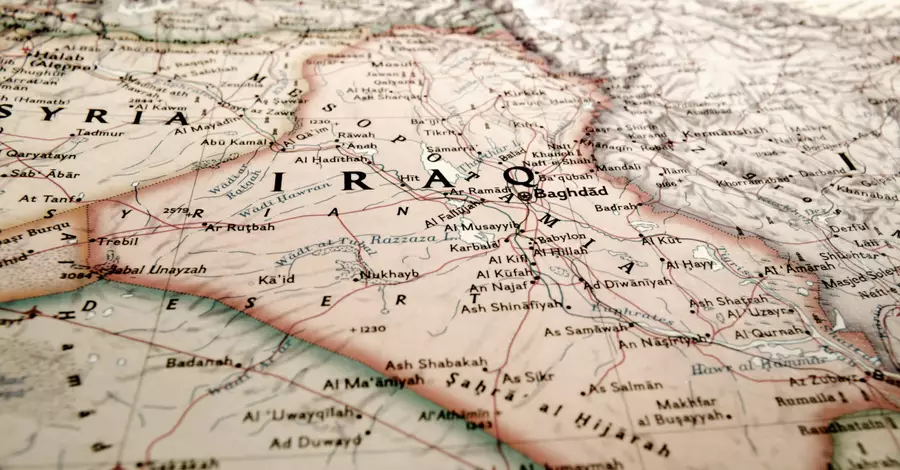
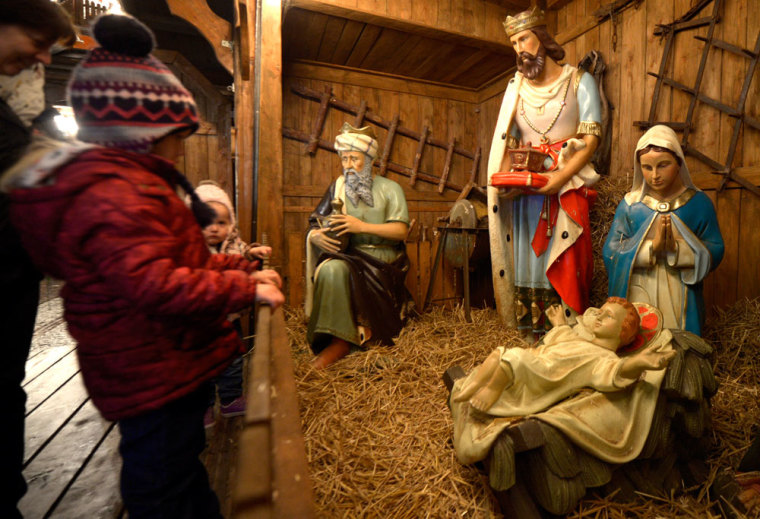
Christmas now an annual holiday in Iraq

 
Christmas now an annual holiday in Iraq

Despite the waning number of Christians in the country, Iraq’s parliament unanimously passed a law to make Christmas “a national holiday, with annual frequency,” according to Christianity Today.

The declaration is the first of its kind to allow Christians to celebrate the holiday every year. In 2008, parliament agreed Christmas could be a “one-time holiday”; ten years later, the government allowed Christmas for all citizens. But the leaders never renewed the law annually.

“Today Christmas is truly a celebration for all Iraqis,” said Basilio Yaldo, bishop at the Chaldean Catholic Church of Baghdad. “This is a message of great value and hope.”

Though religious leaders rejoiced at the news, they continued to express concern for their people.

“The declaration is very beautiful, but it is very late,” said Ashur Eskrya, president of the Assyrian Aid Society—Iraq. “But our trouble is not in holidays, it is in the situation of our people.”

Experts estimate only 250,000 Christians remain in the fractious country. Prior to the US invasion and ISIS insurgency, nearly 1.4 million Christians lived in Iraq.

Iraqis rarely celebrate national holidays. The nation doesn’t commemorate its independence from Great Britain since it coincides with a day of mourning for a Kurdish rebel who worked against Saddam Hussein. And, several Iraqi politicians find the overthrow of Hussein too divisive to celebrate.

But Ara Badalian, pastor of the National Baptist Church in Baghdad, believes the new Christmas law will bring hope and restoration to the small Christian population.

“I hope it will be accompanied by helping the tiny minority of Christians to remain in Iraq,” he said. “[The government] must rebuild their damaged homes, and provide them with protection.”

Also bolstering hopes is the new prime minster, Mustafa al-Kadhimi, who told Cardinal Louis Raphael Sako that he would oversee the return of Christian refugees. Pope Francis also announced earlier this month his intention to visit “the plains of Ur, linked to the memory of Abraham” in Iraq.

“An insistent thought accompanies me when I think about Iraq,” Francis said in June 2019 when he first announced his plans. “I want to go…so that it can look to the future through peaceful and shared participation in the construction of common good.”

Source

Wednesday, December 23, 2020

Man who raped daughter gets free transgender surgery and movement to female prison

 
Man who raped daughter gets free transgender surgery and movement to female prison

A federal judge has ruled that a man convicted of raping his 10-year-old daughter will be allowed to get gender reassignment surgery while in prison, paid for at taxpayers' expense. 

In a ruling earlier this month, U.S. District Judge James Peterson approved the request of Mark Allen Campbell, a 49-year-old Wisconsin man, to undergo gender reassignment surgery, according to the Milwaukee Journal-Sentinel. The man now goes by the name "Nicole Rose" and has identified as female since 2013, when he first requested the operation. 

Campbell sued the Department of Corrections in 2016 after he was denied the surgery, arguing that his rights were violated under the Eighth Amendment of the U.S. Constitution which forbids cruel and unusual punishment. 

He has been allowed to dress as a woman, receive cross-sex hormone treatments, and get counseling at Racine Correctional Institute, a men's prison, the Milwaukee Journal-Sentinel added.

Campbell has been a 34-year sentence after having pled guilty in 2007 to repeated first-degree sexual assault of a child. 

Although Campbell's 2016 lawsuit was denied, Peterson noted in his ruling that the Department of Corrections requested that, if ordered the surgery, that he remand Campbell to live at Taycheedah Correctional Institution, the state's largest women's prison, for a year. 

"That request came as a surprise," Peterson wrote, "because previously the DOC designated any inmate with a penis to a male prison, regardless of gender identity or expression." 

"True public interest lies in alleviating needless suffering by those who are dependent on the government for their care," he said, adding that he would not "impose any further prerequisites on Campbell's sex reassignment surgery."

The Department of Corrections previously stated that while the prisoner met the criteria for surgery, Campbell had not lived as a woman "in real life," something that was said to be impossible while housed in a men's prison. 

Peterson reportedly gave weight to the testimony of a social worker and sex therapist who said that the requirement for "real life experience" might not matter in Campbell's case since Campbell experienced gender dysphoria before prison, had lived as female while incarcerated, and faces many years of imprisonment. 

For Campbell to get the surgery, the lone surgeon in the state who performs sex-change operations will have to agree that it's medically necessary, which could take up to a year to get approved. 

The rights of inmates who identify as transgender have been percolating through federal courts in recent years as claims of transgender activists become increasingly visible. 

In January, a three-judge panel on the Fifth Circuit Court of Appeals ruled against the mandatory use of transgender pronouns. The federal ruling centered around the case of a trans-identified sex offender, Norman Varner, who was convicted of possessing child pornography and had demanded to be referred to by using female pronouns in court documents and to be called "Katherine Nicole Jett."

“If a court orders one litigant referred to as ‘her’ (instead of ‘him’), then the court can hardly refuse when the next litigant moves to be referred to as ‘xemself’ (instead of ‘himself’)," wrote Kyle Duncan, a Trump-appointed judge, in the opinion for the majority.

“Deploying such neologisms could hinder communication among the parties and the court,” the judge added. “And presumably the court’s order, if disobeyed, would be enforceable through its contempt power.”

Duncan concluded: “We decline to enlist the federal judiciary in this quixotic undertaking.”

Source

Tuesday, December 22, 2020

The failing comforts of censorship

 
The disturbing trend of online censorship

Want to produce a video that challenges the fidelity of the 2020 election? Sorry, denied.

Want to deliver information that disputes the COVID-19 information being put out by the CDC, even if you’re a team of very qualified medical professionals? No soup for you.

Odd, isn’t it, that the people who scream loudest about the “threat to our democracy” are many times the ones who work the hardest to undermine it.

And they do a good job. Those powering the Professional Outrage Industry can take credit for 88% of American universities restricting free speech in some form and helping push the tech giants and mainstream publications to shut down opinions they dislike. For example, USA Today now uses leftist college interns to weed out conservative voices.   

Stop making me uncomfortable

While the reasons people carry out censorship and suppression are varied, one overriding motive has to do with that fact that, for many, encountering information that opposes their opinion and worldview results in feelings of discomfort that are so strong they’ll do almost anything to make it stop.   

When Ariana Pekary resigned from her job as producer at MSNBC, she said: “I’ve even heard producers deny their role as journalists. A very capable senior producer once said: 'Our viewers don’t really consider us the news. They come to us for comfort.'”

However, unbeknownst to the person who does everything in their power to inoculate their life against opposing opinions, they end up creating an even more uncomfortable and fearful environment for themselves. Nathanael Blake comments on this when he writes: “The dissolution of the possibility of shared rational dialogue does not reduce wrath, but intensifies it. In the absence of a common standard or tradition of reasoning, moral arguments appear intractable…. Without appeals to a shared reason or authority, there remain only appeals to sentiment. This encourages intense displays of emotion because the force of an argument can only be supported by emotional intensity. Once appeals to sentiment are exhausted, what remains are anger and attempts at coercion.”

Stop making me uncomfortable, God

I’ve been involved in Christian apologetics for many years now and one thing I’ve noticed is that the underlying motivation in most all arguments against God is the need to stop the uncomfortable feelings that come from acknowledging that an absolute moral Creator exists. And because, as Thomas Aquinas said, “the contrary of a truth can never be demonstrated”, the only way to stop such truth from being presented is to censor and suppress it.

Like the Bible says, if you love darkness, you’re going to hate the light (John 3:19) and do your best to block it out.

God’s Old Testament prophets excelled at making people uncomfortable. When Jeremiah delivered his prophecies, he was beaten and silenced (Jer. 20:1-3). God complained to Isaiah about those who, “say to the seers, “See no more visions!” and to the prophets, “Give us no more visions of what is right! Tell us pleasant things, prophesy illusions” (Is. 30:10).  

The same was true in Amos and Micah’s day: “I also raised up prophets from among your children and Nazirites from among your youths. Is this not true, people of Israel?” declares the LORD. “But you made the Nazirites drink wine and commanded the prophets not to prophesy.” (Amos 2:11-12).

The Old Testament prophets lived everyday something Isaiah spoke about: “Truth is lacking, and one who turns aside from evil makes himself a prey” (Is. 59:15). 

Go to the New Testament and count how many times the religious leaders tried to shut Jesus up because of the moral pricks He inflicted on them. Paul wrote about how infuriated people get over the fact that God embeds knowledge of Himself into their soul so, they in turn, “suppress the truth in unrighteousness, because that which is known about God is evident within them; for God made it evident to them” (Rom. 1:18-19). 

It’s like one atheist who finally admitted that God was real and said, “I’ve become angry at God for not not existing”. 

Like many who run to their favorite lying mainstream media outlets for comfort, those wishing to make God go away also want “to have their ears tickled” so “they will accumulate for themselves teachers in accordance with their own desires, and they will turn their ears away from the truth” (2 Tim. 4:3-4).

This is why, in addition to censoring secular conservative content, Youtube also says “you can’t” when it comes to posting videos about God’s truth on certain moral issues. I’m betting it won’t be long before Youtube adopts the same stance as many communist countries where even the basic idea of God is censored.

So, don’t be surprised if a search for “God” on Youtube one day soon returns the message, “No results found”. 

Source

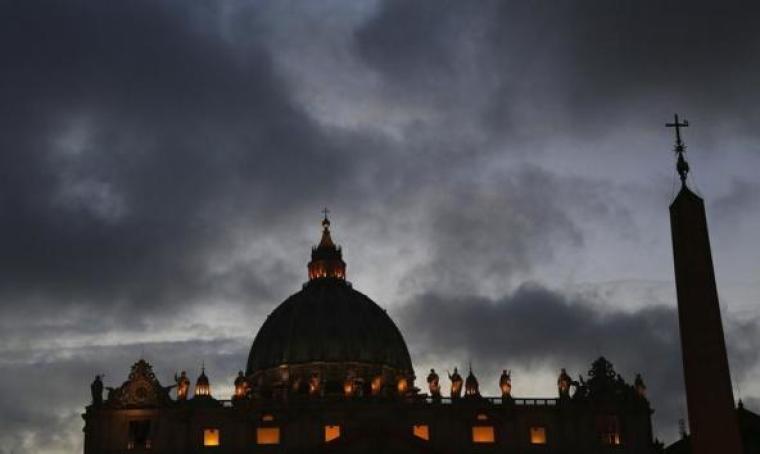
Vatican allows taking COVID-19 vaccine even if produced using aborted fetal cells

 
Vatican allows taking COVID-19 vaccine even if produced using aborted fetal cells

The Vatican has declared that coronavirus vaccines are “morally acceptable” for Catholics to take, even if their development involved using aborted fetal cells.

In a statement from the Congregation for the Doctrine of the Faith that Pope Francis approved, the Catholic Church said that “all vaccinations recognized as clinically safe and effective can be used in good conscience with the certain knowledge that the use of such vaccines does not constitute formal cooperation with the abortion from which the cells used in production of the vaccines derive.”

“It is morally acceptable to receive Covid-19 vaccines that have used cell lines from aborted fetuses in their research and production process,” stated the CDF, as reported by Vatican News on Monday.

The CDF went on to clarify that “the morally licit use of these types of vaccines, in the particular conditions that make it so, does not in itself constitute a legitimation, even indirect, of the practice of abortion, and necessarily assumes the opposition to this practice by those who make use of these vaccines.”

“In the absence of other means to stop or even prevent the epidemic, the common good may recommend vaccination, especially to protect the weakest and most exposed,” it added.

The Catholic body said it believes that vaccination should be voluntary and called on pharmaceutical companies to make the vaccine readily available for impoverished countries.

In pro-life circles, there has been debate over whether to take the COVID-19 vaccine, as the AstraZeneca vaccine was developed in part through growing a modified virus in cells taken from embryonic kidney tissue derived from an abortion performed decades ago, according to Snopes. Researchers have stated that the aborted tissue was not part of the vaccine, but only used for testing it. 

Also, the Moderna vaccine was developed via the HEK-293T cell line, which were indirect descendants of aborted fetal cells derived from a baby aborted in the Netherlands in the 1970s, according to the Catholic News Agency.

This has led some pro-life groups, among them Georgia Right to Life, to urge supporters to not take the vaccine when it becomes widely available.

"The production and testing of vaccines using the remains of aborted human beings, regardless of manner of conception, is morally wrong and must be opposed. GRTL strongly urges the rejection of such vaccines," read their policy statement.

Earlier this month, the Bishops’ Conference of England and Wales released a statement in support of people taking the vaccine despite its origins.

The Rt. Rev. Richard Moth, chair of the Conference’s Department of Social Justice, said that the Congregation for the Doctrine of the Faith and the Pontifical Academy of Life have stated that “one may in good conscience and for a grave reason receive a vaccine sourced in this way, provided that there is a sufficient moral distance between the present administration of the vaccine and the original wrongful action.”

“In the COVID-19 pandemic, we judge that this grave reason exists and that one does not sin by receiving the vaccine,” stated Moth.

“Each Catholic must educate his or her conscience on this matter and decide what to do, also bearing in mind that a vaccine must be safe, effective, and universally available, especially to the poor of the world.”

Source

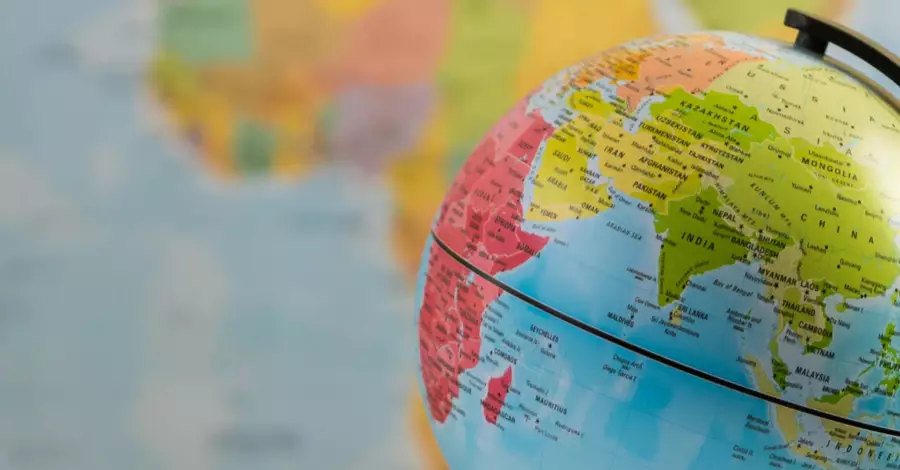
Pastor in India Shot and Killed after Baptizing People


Pastor in India Shot and Killed after Baptizing People

A pastor in India was shot and killed in the street in the state of Jharkhand as he was returning home from baptizing believers.

He was attacked and harassed by three unidentified men and one shot him, according to the pastor's wife.

"They killed my husband in front of my own eyes. I was terrified seeing my husband collapse having been shot in the chest. I started to think about my children and loudly cried out to God to save me and take care of my [two] children. I ran into the thick bushes and the nearby forest. I probably walked for more than 10 hours to reach my home. I purposely did not take the road to avoid the attackers."

As of early Saturday, police were still investigating the case. His body was found by local villagers at 5 A.M. lying on the road, International Christian Concern writes. He received threats from radical Hindus who lived there. Further, the Christians who live in the region of the church he attended were also regularly receiving death threats. According to International Christian Concern, "Local Christians report there have been multiple threats issued against Christians in Putikda village. According to one source, the Christians of Putikda have been told they must renounce their Christian faith.

The Christian Post reports a mob of 50 people attacked a community of Christians in another region of India close to Jharkhand. They were attacked at midnight on November 24, 2020, after observing the Advent season and celebrating the birth of a child in their community. The mob burned Bibles, damaged motorcycles, and accused the Christians of "destroying" the local culture. However, this is not just localized to one region of India.

According to Open Doors' Christian persecution watchlist, India is the 10th most difficult countries for Christians to live in. According to the report, "Since the current ruling party took power in 2014, incidents against Christians have increased, and Hindu radicals often attack Christians with little to no consequences."

Source

Monday, December 21, 2020

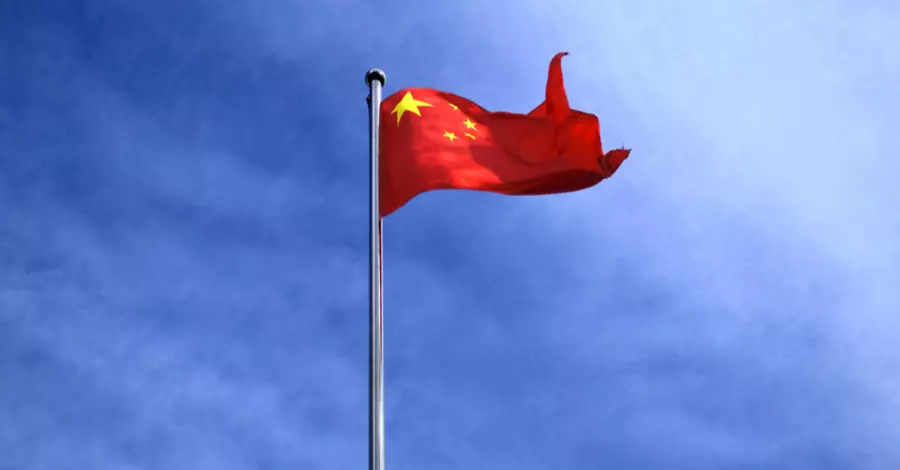
Thousands of Pastors Go into Hiding in China

 
Thousands of Pastors Go into Hiding in China

Droves of pastors across China have disconnected from their computers and phones, destroyed their ID cards which contain microchip trackers and are needed to do virtually anything in China, and have gone into hiding.

According to a newsletter from Asia Harvest, a church planting group working in Asia, "The situation for believers in China has been extremely difficult, as Xi Jinping and the Communist Party gradually prepare for what seems like a final assault to try to rid Christianity from the country once and for all.

“To that end, the government has openly announced plans to ‘reinterpret’ the Bible and other religious texts, so they will have 'socialist characteristics'."

The Chinese Communist Party has been creating an altered version of the Bible that seeks to inject communist messages into the Holy Scriptures, The Christian Post reports.

According to Asia Harvest, tens of thousands of house church pastors in China have gone missing. This was what prompted other pastors to begin disconnecting from the internet and destroy their ID cards. However, even though the Chinese Communist Party has ramped up efforts to persecute Christians, according to the World Evangelical Alliance, the number of Christians belonging to either the Protestant or Catholic church has grown from 4.3 million to more than 93 million.

The State Department and other governing bodies have condemned the persecution of Christians in China, and a new House resolution was introduced to condemn Chinese persecution of Christians.

The State Department has stated "Since 1999, China has been designated as a “Country of Particular Concern” (CPC) under the International Religious Freedom Act of 1998 for having engaged in or tolerated particularly severe violations of religious freedom. On December 18, the Secretary of State redesignated China as a CPC and identified the following sanction that accompanied the designation: the existing ongoing restriction on exports to China of crime control and detection instruments and equipment, under the Foreign Relations Authorization Act of 1990 and 1991 (Public Law 101-246), pursuant to section 402(c)(5) of the Act."

Source

Mary wasn’t ready to be a mom

 
Mary wasn’t ready to be a mom

Each Advent offers a new opportunity to meditate on some of the strangest mysteries of God: That He made Himself human. That he would be born lowly (and stay that way). That He would be born of a virgin.

It’s our first glimpse of the virgin birth in the Gospel of Luke that offers one of the most provocative, counter-cultural responses ever given by a biblical character to a revelation from the Lord.

When the angel Gabriel tells Mary — a young, unmarried virgin — that she will give birth by the Holy Spirit to the Son of God, we have every reason to believe she knew the cultural implications. She assumed (rightly) that Joseph would not marry her. She’d be ostracized from her Jewish community and considered unclean. As a result, she’d face dangerous poverty. Still, her response to the angel was:

“To me be as it pleases God” (Luke 1:38).

Grasping for control

It’s ironic that Mary’s radical submission sets in motion the events we celebrate at Christmas, a holiday too often dominated by consumerism. Mary’s self-forgetfulness is a poignant antonym to the gift-getting season. It’s also antithetical to the way so many of us approach what was thrust, unexpected, on Mary in Luke 2: parenthood.

My husband and I married in our early 20s. We didn’t consider ourselves “ready” to have children. We weren’t even sure we ever “wanted” them. Our pastor at the time said that was fine; as long as we were “on the same page.” We had a travel bucket list, first of all. We had a goal in mind for our savings account. I wanted to go to Thailand. We didn’t even own a house yet! (Imagine!)

It’s unlikely Mary — or her first century contemporaries — would have recognized a single one of these newly-married, self-indulgent impulses. Somewhere between Mary and me, something big got lost.

Writer and theologian Christopher West, in his book Our Bodies Tell God’s Story (which is a lay-language translation of the late Pope John Paul II’s “Theology of the Body”) controversially asserts that the introduction of contraception into our sexual ethic sent the world — yes, the whole world — into a tailspin.

“The biblical vision of sexuality as understood throughout the ages can be summarized very simply: marriage, sex, and babies belong together — and in that order,” West writes. “When we begin untying the tight-knot nexus of marriage, sex and babies, we end up redefining all three.”

Contraception, West argues, sent our imaginations running askew. It flipped our perspective of one of our core design elements — our capacity to make babies — into the perfect inverse of Mary’s perspective: It fooled us into believing we had control over it. And when we had believed that long enough, we started to believe we should have control over it.

God designed women’s bodies with a cycle that allows for natural “contraception.” The Bible doesn’t prohibit strategic family planning. But as we contemplate this Advent Mary’s remarkable submission to a motherhood she couldn’t control, we must admit we’ve fallen far short of her humility.

In his new book, What it Means to be Human, O. Carter Snead, the director of Notre Dame University’s de Nicola Center for Ethics and Culture, says our problem is an anthropological one. What’s been lost between Mary and us, he says, (and what Christopher West might argue contraception has stolen) — is a shared concept of what it means to be human.

The Bible paints a picture of humanity as embodied souls. Snead says we are created and born with bodies and minds, meant to exist in community, including as parents. Modernism, by contrast, conceptualizes human flourishing as the expression of our own independent wills. We are defined by our capacity to do what we want. Bodies are important, in this view, only inasmuch as we can use them toward that goal.

Our contemporary view of parenthood is Exhibit A. Assisted reproduction – technologies including surrogacy, sperm donation, egg donation, and in vitro fertilization (IVF) – are together a multi-billion dollar global industry and have permeated the American evangelical church. Certainly no one – especially couples struggling with infertility – approach these endeavors lightly. Most seek assisted reproduction with honesty and in good faith, even as a gift from God. Many doctors pursue work in those fields out of a real desire to help families.

But we have to reckon with the reality that the availability of this technology, as well as contraception and abortion, has fundamentally altered the way we view ourselves. As Christopher West predicted, the “redefining” has started. If marriage and babies no longer “go together,” marriage becomes simply a means to find our own individual “happiness.” Sex is reduced to an exercise in personal pleasure. Babies can become “products” – either to be sought on our own “timetable” or discarded.

In each assisted reproductive industry – from surrogacy to sperm donation to, in some cases, IVF – we commit a separation that Mary did not see fit to request. Surrogacy creates babies with the expressed intent to separate them from the only thing they know – the women who carry them.

Using donated sperm to create a child robs that child of his or her right to their father. Even IVF, when pursued unethically (such as in cases when parents create more embryos than they intend to parent), separates embryos – full, human people – from their parents. Each of these endeavors also separates babies from sex within the sacred knot of marriage.

The Church would never have embraced assisted reproductive technologies without first indulging an anti-biblical assertion of control over childbearing. While God sees and laments every pain we experience, including infertility, His Word never suggests we are entitled to have our own biological children. Neither does He issue the right to pursue intentionally childless “marriage,” because that’s not what marriage is for.

How did we get here?

Pain in parenthood

I think we try to assert control over family-building because in an age of so much comfort, we reject the notion that there should be any pain in parenthood.

When my daughter was born in 2016, I was shocked by what I felt for her. Jonathan Safran Foer, in his 2016 novel Here I Am, calls parenthood “too much love for happiness.” Just a few tender weeks postpartum, I remember wrapping my girl in one of those creamy-soft hospital blankets and bringing her to my women’s Bible study group. A fellow mom (I considered myself a veteran by this point) was asking for prayer. Her 16-year-old daughter was going for her driver’s test that week. I immediately started crying. Hormones, sure. Even so, it felt real! This tiny little chubby, perfect face wrapped in a panda bear blanket? Driving? In 16 impossibly short years?

“Remember the curse God levels on Eve (and the rest of us) in Genesis 3:16?” The Sunday after that Bible study, I confronted my pastor about my newly discovered fear-love. This was his “advice” (it felt more like a theological bow-and-arrow): “‘With pain you shall bring forth children,’” he recited to me, in an email. “That is NOT just about childbirth. … It is about the entire experience of having children.”

There’s pain in parenthood. There’s pain, too, in not having children – in wanting them and facing infertility; in wanting them and struggling in a difficult marriage or struggling to find marriage. Just like there’s pain in life because of the Fall, we should expect pain in the most emotionally intense parts of life, including building families.

But for some reason, many of us – especially those with considerable privilege – don’t. I suspect I was shocked by how I felt about my newborn daughter – love that played itself as fear – in part because my only imagination about the first weeks of having a baby was bliss. I was blessed with financial stability and a supportive husband. We had planned and hoped for our girl before she came. I had pictured snuggles, smiles, and really only the kind of challenges that I, along with my many supportive friends and family, could easily solve.

We’re not good at expecting pain when we’re surrounded by so much comfort. That can be pleasant, but it’s not good for us. Comfort-entitlement breeds a sort of consumerism – all year-round – that leaves us unprepared for reality. It lulls us into forgetting that we’re embodied image-bearers at the mercy of our Creator; not mere pleasure-seekers sitting at the helm.

As a newlywed, I approached building my family not as Mary did – as an act of submission to God’s good design for humanity and His good will for me – but first and foremost as a consumer.

I wanted marriage because my husband made me happy, not because I submitted to it as God’s beautiful way of continuing to populate His Kingdom. Back then, I said I didn’t “want” kids (or that I didn’t want them “yet”) because I thought they were things to want or not want yet; not image-bearers that God would be pleased to entrust to us … or to withhold.

What if Mary had asked the angel if she were really ready for kids? If having a son would really make her happy? What if she’d believed she had control; or that she’d had a right to control?

In that case, she may never have borne our Messiah: the very One who can take every pain of parenthood and infertility and, while enduring it with us, give us the full comfort of promising that in His kingdom, that pain will be no more.

Source

2020 may have been miserable. But for God, it was another incredible year

 
2020 may have been miserable. But for God, it was another incredible year

The year of COVID-19 – as 2020 is sure to be known – is a year most people will be glad to forget. But God turned it into one of His most incredible years ever!

Nations locked down and closed their borders – but God opened the floodgates for the Gospel in the most inaccessible and hostile places on earth.

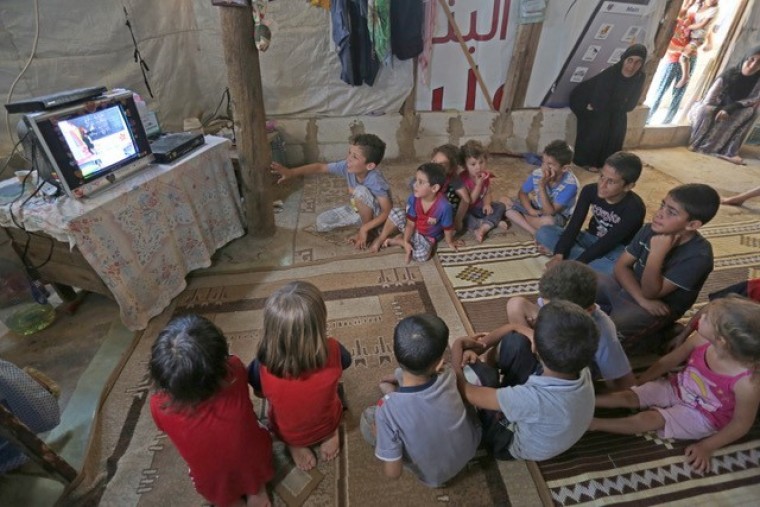
The pandemic shuttered churches and forced people into isolation, but God simply made Himself at home – sending the message of His love into living rooms, even in unexpected places like the Middle East and North Africa.

The Gospel of John records that the resurrected Jesus entered the Upper Room through locked doors and reassured the disciples, saying: “Peace be with you.” Likewise in 2020, the doors were shut, but God used other channels of entry – satellite television, online video streaming and social media platforms – to spread His peace and love as a viral antidote to despair and fear.

Yes, oppressive governments, dark spiritual forces and a global pandemic were unleashed to thwart the love of Christ – but God turbo-charged the advance of the unstoppable Gospel via smartphones, tablets, computers and smart TVs.

At SAT-7 (www.sat7usa.org), 2020 brought a huge surge in social media engagement, video downloads and program viewership – including 160 million views on YouTube, as people across the Middle East and North Africa hungered to see real hope.

Pandemic, war, disaster, financial ruin and chaos hammered this ancient region. But God sent His love in boundless waves amid the trauma and turmoil, using visual technology as a channel to heal broken hearts and transform lives.

In Iran, Christ-followers met secretly in homes behind closed doors, facing imprisonment, beatings and even death if discovered. But God moved beyond borders and into Iran – speaking directly to people’s hearts through satellite broadcasts and social media interactions in Farsi, the local language – to propel the fastest-growing church in the world. “Closed countries” are not closed to the Sovereign Lord.

“I don’t go outside often, yet on the rare occasions when I do, I hear: ‘My daughter has become a Christian,’ and another says, ‘I know some person who has become a believer’,” said Mona, a viewer in Iran. “So I see a day coming when Iran will be free, and all the believers will come out and worship the Lord together.”

Making God’s Love Visible

In August, Lebanon suffered a catastrophe which some called “Beirut’s 9/11.” A massive explosion in the capital city killed more than 200 and injured 6,000. Several hundred thousand became homeless, adding to the country’s already serious humanitarian challenges among two million refugees. Some believed it was God’s judgment on the nation. But God turned national grief into an opportunity for His love to become visible to everyone.

“Thousands are turning to our channel for reassurance and hope,” said SAT-7’s Lebanon director Maroun Bou Rached in the days after the explosion. “With the grieving, we weep; with those on the edge of suicide, we pray and share the hope of the world – Jesus.”

In Algeria, all churches were forced to close in 2020, fueling fears they may never be allowed to re-open. But God used broadcasts, featuring local Arabic-speaking presenters, to encourage believers and non-believers alike.

“I’m fascinated by your integrity as Christians, your faithfulness to your God, and also your sincerity to your traditions,” Rany, a viewer in Algeria told SAT-7’s Arabic channel. “You’re going to make a difference. Go ahead, Christians, you’re an example.”

In Syria, war left tens of thousands utterly desperate. But God was on the move in people’s hearts. “Jesus turned my life upside down,” said Soha, a viewer in Syria. “When I saw the love and forgiveness in the Christian community, how you love each other, pray for each other… this was a door of light to me.”

During 2020, governments wary of Christianity tried to censor our broadcasts and online outreach, including one-on-one social media conversations with seekers like Soha. But God has frustrated their efforts. Smartphone users in countries like Syria, Turkey and Iran have installed apps that bypass firewalls and protect their identity – giving them freedom to watch Gospel broadcasts, stream Christian videos and talk online with our counselors.

For many in America, 2020 is a year that can’t end soon enough, a year we’re eager to put behind us. But God has made 2020 an unforgettable year for many in the region of the world known as “the cradle of Christianity.” With “2020 vision,” millions have seen the love of God in Christ Jesus through visual technology – many of them for the first time.

“In June one of my sisters came to faith, then in July my daughter, and now my second sister,” shared SAT-7 viewer Sarah. “I’m sure my other sister will come to faith and my mother will follow. I’m sure of it!”

The year is almost over. But God – the Instigator of the incredible – has amazing things planned in 2021.

I’m sure of it!

Source

Saturday, December 19, 2020

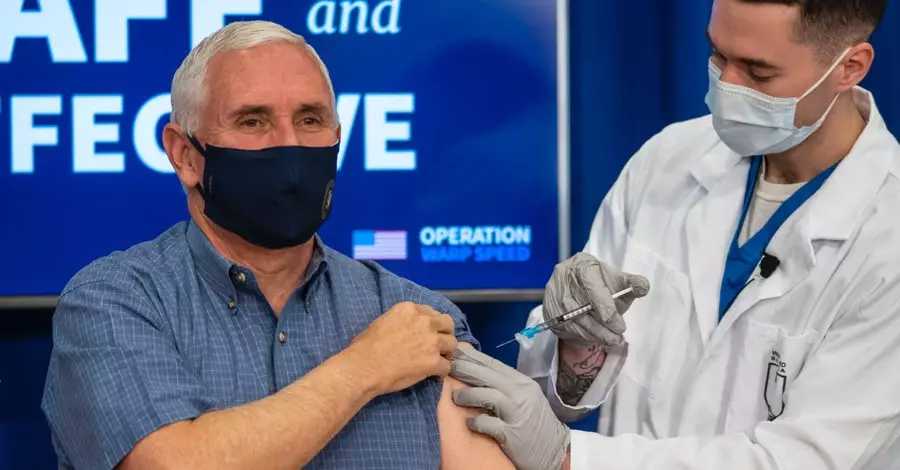
US VP Mike Pence receives COVID-19 vaccine on Live TV and calls it a 'Medical Miracle'

 
US VP Mike Pence receives COVID-19 vaccine on Live TV and calls it a 'Medical Miracle'

Telling Americans “hope is on the way,” Vice President Mike Pence received a dose of the COVID-19 vaccine on national television Friday as a way to demonstrate it is effective but also safe.

“Make no mistake about it. It's a medical miracle,” Pence said moments after he, Second Lady Karen Pence and Surgeon General Jerome Adam each sat in chairs in front of cameras and received a shot of the Pfizer vaccine.

“Hope is on the way,” Pence said.

The Pfizer vaccine began shipping to states in recent days, and the Moderna vaccine is expected to be shipped soon, too. Cells from abortions were not used during the development of either vaccine, according to the pro-life Charlotte Lozier Institute. The U.S. Conference of Catholic Bishops has urged Catholics to get vaccinated with either the Pfizer or Moderna vaccines, calling such an action “an act of charity toward the other members of our community.”

Pence applauded the scientific community for their quick action on developing vaccines against COVID-19.

“Building confidence in the vaccine is what brings us here this morning,” Pence said. “... Karen and I wanted to step forward and take this vaccine to assure the American people that while we cut red tape, we cut no corners.”

The average vaccine, Pence said, “usually takes between eight and 12 years to develop and then manufacture and distribute.”

“We're on track here in the United States to administer millions of doses to the American people in less than one year,” he said. “… I also believe that history will record that this week was the beginning of the end of the coronavirus pandemic.”

Pence touted Operation Warp Speed, the Trump administration’s public-private partnership that had a goal of releasing a vaccine by year’s end.

“Under Operation Warp Speed, we are poised to have vaccine for 20 million Americans before the end of December,” Pence said. “It is truly a medical miracle, and an inspiration to people across this country. … We have a safe and effective vaccine.”

Source

Friday, December 18, 2020

Christian Wife in Uganda Forced to Drink Pesticide by Muslim Husband

 
Christian Wife in Uganda Forced to Drink Pesticide by Muslim Husband

A 38-year-old mother of three in eastern Uganda had secretly put her faith in Christ for three months before her Muslim husband found two Bibles in her suitcase.

On that day, Nov. 21, in Bugiri District’s Matovu village, Zubeda Nabirye’s husband asked her why she had the two Bibles, one in English and the other in their tribal language. Her husband, Umar Kyakulaga, also asked if she had converted to Christianity, she said.

“I replied to him that a friend had given me the Bibles, and that I was using it to compare it with what is written in the Koran, and after all religion is a matter of personal choice,” Nabirye told a Morning Star News contact. She also told her husband, “I was convicted and decided to embrace Christianity.”

Kyakulaga grew angry and picked up a copy of the Koran, she said.

“My husband began reading verses in the Koran that allowed men to beat their wives if they disobey them, and after that he started beating me with slaps and sticks,” she said. “As if this was not enough, he forced me to take Dithane M-45,” a toxic pesticide.

She tried not to swallow the pesticide he had forced into her mouth but ingested some while he was trying to strangle her and hitting her leg with sticks, she said. He also injured her chest, neck and thigh, Nabirye said.

When the couple moved to Matovu from Kaliro district earlier this year, they had left their three children with Nabirye’s mother-in-law due to the COVID-19 pandemic. Thus no one else was home when Nabirye lost consciousness.

“It was around 10 p.m. when I regained consciousness and found myself surrounded by neighbors,” she said.

Neighbors told Morning Star News that they heard crying and wailing at Nabirye’s home, but that by the time they made it there, the place was empty.

“While we were going back, we heard groaning from a nearby banana plant, and there we found Zubeda Nabirye, who had just regained her consciousness but with vomit and blood all over her body,” one of the neighbors told the Morning Star News contact. “We then arranged for her transportation to the hospital near her home in Kaliro.”

Nabirye said she suspects her husband took her to the banana plants expecting she would die there.

A relative said Nabirye would not file charges with police over the assault as it could provoke further violence.

Nabirye, who put her faith in Christ on Aug. 21 after learning about Him over several months from a pastor, was discharged from the medical clinic on Dec. 2. At this writing she was staying with a Christian family at an undisclosed location.

“She still looks very weak and asks about the wellbeing of her three children,” the Morning Star News contact said.

Her children are ages 16, 13 and 9.

“I am worried about my children, who are under the care of my mother-in-law,” Nabirye said. “I know it will be very difficult for me to see them and reunite with them.”

The assault was the latest of many instances of persecution of Christians in Uganda that Morning Star News has documented.

Uganda’s constitution and other laws provide for religious freedom, including the right to propagate one’s faith and convert from one faith to another. Muslims make up no more than 12 percent of Uganda’s population, with high concentrations in eastern areas of the country.

Source

Thursday, December 17, 2020

Government Restrictions on Religion is Highest in 13 Years

 
Government Restrictions on Religion is Highest in 13 Years

Faith leaders are addressing the recent Pew Research study that shows record-high levels of restrictions on religious freedom.

According to CBN News, Religious Freedom Ambassador Sam Brownback says that in order for other human rights to flourish, the right of religious freedom must also be protected.

"We look at this religious freedom foundational right that if you can get it right as a nation other human rights will flourish. If you get it wrong other human rights will diminish," Brownback asserted.

Last month, Pew Research revealed that in 2018, government restrictions on religion hit an all-time high since 2007. The study also showed that high or very high government restrictions peaked in 56 countries, with the highest restrictions being in Africa and the Middle East.

We've never been more institutionalized, but we've never seen more persecution. The new Pew reports are out and there has never been more persecution, so we are getting our act together on how this gets institutionalized but obviously, we have to go to another level here as a civil society, as a government,” Chris Seiple of Templeton Religion Trust said.

In 2018, the White House intervened to free pastor Andrew Brunson, a missionary who was arrested in Turkey after he was falsely arrested for partaking in an alleged coup with Kurdish terrorists against Turkish president Erdogan.

Last week, Christian Headlines reported that Brunson predicted increasing persecution against U.S Christians in the future.

Brunson, who shared his remarks at the "Global Prayer for US Election Integrity" event on Facebook earlier this month, explained how Christians across the nation are unprepared for the forthcoming hostility that will be made against them.

“I believe the pressures that we're seeing in our country now are going to increase, and one of these pressures is going to be hostility toward people who embrace Jesus Christ and his teaching, who are not ashamed to stand for him," he warned. "My concern is that we're not ready for this pressure. And not being prepared is very, very dangerous on a number of levels."

In June, President Trump signed an executive order that makes international religious freedom a priority in U.S foreign policy. Faith leaders hope that the same the Biden administration will also make religious freedom a priority.

Source

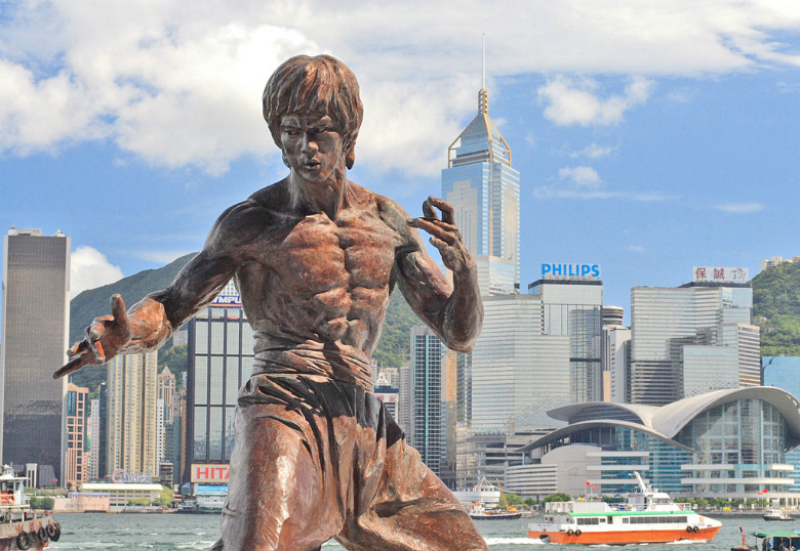
4 Evangelism Lessons We Can Learn From Bruce Lee's Life

4 Evangelism Lessons We Can Learn From Bruce Lee's Life

I've always been a huge Bruce Lee fan. When his movie, Enter the Dragon, came out to theaters in the 70's, I was hooked. Soon after watching Bruce Lee's epic and, sadly, last film before his premature death, I signed up for Kung Fu lessons at the nearest and cheapest dojo I could find.

Bruce Lee was a game changer when it came to martial arts, not just for me, but for millions around the world. His movies inspired a generation to take up martial arts. Bruce Lee was not just a one-of-a-kind action star, he was a brilliant trail blazer.

It's hard to believe that on November 27, 2020, Bruce Lee would have turned 80 years old! It seems like yesterday he was beating up Chuck Norris in The Way of the Dragon or playing the high-flying, hard-kicking Kato on Green Hornet or showing the world how to do a one-inch punch and a two finger push up.

Although Bruce Lee, as far as I know, was not a Christian, I believe there are 4 lessons his life can teach us about evangelism:

1.  Practice. Practice. Practice.

As a young teenager in Hong Kong, Bruce Lee started learning martial arts after getting into some street fights. He wanted to know not just how to fight, but how to win every fight. He went on to master his craft and become a world class martial artist.

To achieve his level of excellence he practiced relentlessly. To this day, the intense training regiment he developed over the years is legendary among members of the martial arts community. 

In the same way, if we as Christians want to become effective at evangelism, we must practice sharing our faith to the point of mastery. We must learn how to ask good questions (like Jesus in John 4), share our stories (like Paul in Acts 26) and articulate the message of Jesus in a clear and compelling way (like John in John 3.)

Getting your "black belt" in evangelism takes precision, persistence and power - divine power (Acts 1:8.) It also takes a Bruce Lee level of practice.

For all you white belts out there, here's a 4 minute video we filmed a few years back called "A Crash Course in Evangelism." It will give you some basic evangelism "moves" to start practicing.

2.  Share the beauty of your message to a world hungry for it.

Because of Bruce Lee's frequent street fights and gang affiliations as a young man, his parents sent him to America soon after he turned 18. Within a few years he settled in, went to college and started teaching the beauty of Chinese culture, as demonstrated through martial arts, to Americans who were hungry to learn.

Although some of the old school Chinese didn't like him teaching their secrets to "outsiders", Bruce Lee persisted and began to successfully train many Americans in the secrets of all things Kung Fu.

The secrets of martial arts are hardly a secret anymore. Drive through any town and you will see martial arts schools that range from Kung Fu to Karate to Jiu-Jitsu. Bruce Lee helped to popularize martial arts across America and around the world. His blockbuster hit, Enter the Dragon, mainstreamed martial arts globally.

Christianity had its own "Bruce Lee" of sorts that took ancient secrets and made them known to the world. His name was the Apostle Paul.

In Ephesians 3:8,9 Paul wrote, "Although I am less than the least of all the Lord’s people, this grace was given me: to preach to the Gentiles the boundless riches of Christ, and to make plain to everyone the administration of this mystery, which for ages past was kept hidden in God, who created all things."

The ancient secret hidden away in the Old Testament scrolls was Jesus and his Good News message! And, just like Bruce Lee made the secrets of Chinese martial arts known to the world, Paul made the secrets of the gospel of Jesus Christ known to both Jews and Gentiles.

We are to follow Paul's example. We are to let the world see the beauty of the Christian message and hear the good news of Jesus. It is our sacred duty to make these secrets known (Matthew 28:18-20.)

The world is your dojo! Start recruiting students!

3.  Keep what works and throw away the rest.

Eventually, Bruce Lee created his own style of martial arts called Jeet Kune Do. He felt that many of the martial arts styles were filled with wasted motions and moves. He borrowed what worked best in every style of fighting and mixed them together to form his own. This is where we get the modern term "Mixed Martial Arts." The UFC and Bellator are huge global fighting businesses that owe their existence, in large part, to the pioneering fighting style of Bruce Lee. 

In the same way, when it comes to evangelism, we need to adapt from various methodologies to find out what works best. Then we need to build it into our own personal evangelism style.

4.  Master your "weapon."

Bruce Lee was well known for his mastery of nunchucks. It was his use of this fighting weapon that got me practicing nunchucks for countless hours when I was a teenager.

By God's grace, and, after a lot of bruises, I got semi-decent at using them. 

May Bruce Lee's legendary legacy and the four lessons we can learn about evangelism from his life, inspire you to be a more effective witness for the Lord Jesus Christ...and deliver a knock out blow to Satan in the process!

Source

Wednesday, December 16, 2020

Christian groups want Biden to change US policy in Israel and fund the Palestinian authority

 
Christian groups want Biden to change US policy in Israel and fund the Palestinian authority

A coalition of 17 Christian groups and denominations have asked President-elect Joe Biden to roll back the Trump administration's policies pertaining to Palestinian territories and Israel.

In an open letter sent to Biden last Friday, the church groups stated that “the Christian community in Israel/Palestine continues to suffer as a result of the ongoing [Israeli] occupation.”

“As Palestinian Christians continue to emigrate, we face the real prospect that the survival of the indigenous Christian presence in the Holy Land may soon be in danger,” they stated.

“By ensuring the U.S. government stands firmly in support of peace and justice for all in the region, your administration can help ensure the Christian community, along with all in the Holy Land, can flourish.”

The groups, which include the United Methodist Church and the Presbyterian Church (USA), argued that actions taken under the Trump administration, such as ending funding for the Palestinian Authority and the recognition of disputed territory like the Golan Heights as belonging to Israel, hindered the Israeli-Palestinian peace process.

“Over the last four years, U.S. policy has moved in directions that have alienated the U.S. from many of its international partners and supported the deepening of Israel’s occupation while undermining long term efforts to realize a just and lasting peace,” claimed the letter.

“If the U.S. remains committed to realizing peace with justice in Israel and Palestine there is a need for an immediate change in policy and approach when your administration enters office.”

The letter listed six proposals to help advance peace, which included respecting all parties, reiterating that Israeli settlements are illegal under international law, resuming funding for the Palestinian Authority, greater accountability regarding how U.S. military aid to Israel is used, rejecting Israeli claims to certain disputed territories, and protecting the rights of advocates of divesting from Israel.

“Over the last four years there has been a coordinated effort to prohibit speech critical of Israel and to make it illegal to support boycott, divestment and sanctions (BDS) actions,” stated the letter.  

“We ask that your administration make it clear that Americans’ rights to engage in speech and actions critical of the government of Israel are constitutionally protected.”

Entities that signed on to the letter included: the Alliance of Baptists, American Friends Service Committee, the Disciples of Christ, the Office of Social Justice of the Christian Reformed Church in North America, the Office of Peacebuilding and Policy of the Church of the Brethren, Church World Service, Churches for Middle East Peace, the Episcopal Church, the Evangelical Lutheran Church in America, the Friends Committee on National Legislation, the Maryknoll Office for Global Concerns, the Mennonite Central Committee U.S. Washington Office, National Council of Churches of Christ in the USA, the Presbyterian Church (USA), the Reformed Church in America, the United Church of Christ, and the General Board of Church and Society of the United Methodist Church.

The Trump administration has been known for its staunch support of Israel, which included officially recognizing Jerusalem as the capital of Israel by moving the U.S. embassy there in May 2018.

"Thank you, President Trump, for having the courage to keep your promises," said Israeli Prime Minister Benjamin Netanyahu at the 2018 ceremony. “Thank you President Trump and thank you all, for making the alliance between America and Israel stronger than ever.”

In September, the White House oversaw a diplomatic agreement being signed between Israel, the United Arab Emirates, and Bahrain known as the Abraham Accords.

Yael Eckstein, president of the International Fellowship of Christians and Jews, referred to the Abraham Accords in a statement at the time as miraculous.

“Sometimes in history, God blesses his people with miracles, from the parting of the Red Sea to the reestablishment of the modern state of Israel. Today is also a miracle — a miracle of peace,” she stated.

“It’s been over two decades since the nation of Israel last entered into a peace agreement with another Middle Eastern country. Israel has often extended its hand for peace. Now that hand has been grasped twice in 29 days thanks to courageous leaders willing to take risks in order to realize a lasting peace.”

In October, a similar deal was reached between Israel and the Sudan, with the latter being taken off the State Department's list of State Sponsors of Terrorism as part of the agreement; in return, Sudan compensated victims of terrorism.

Source

Many think believing in God is no precondition for having good moral values, survey shows

 
Many think believing in God is no precondition for having good moral values, survey shows

The most common religious identity among young adults in the U.S. is "none," and the majority of Americans don’t believe it’s necessary for a person to believe in God to be moral and have good values, a new survey has found. 

Released Tuesday, AEI’s Survey Center on American Life investigating contemporary religion in the U.S. found that among young adults (age 18 to 29), the most common religious identity today is none. More than one in three (34%) young adults are religiously unaffiliated.

Nearly nine in 10 (87%) Americans report they believe in God, but just over half (53%) report they believe in God without any doubts at all. Of these, more than eight in 10 white evangelical Protestants (87%) and black Protestants (83%) say they are absolutely certain God exists. 

Overall, 42% of Americans have a close social connection with someone who is religiously unaffiliated — up from 18% in 2004.

Additionally, most Americans say it's not necessary for a person to believe in God to be moral and have good values. Close to six in 10 (59%) Americans say a belief in God is not a precondition to being moral and having good values, while 41% of the public say a belief in God is essential.

These statistics, the authors say, mark a “remarkable shift in recent years.”

The study also found that Americans are almost equally divided over whether it is better to discuss religious beliefs and ideas with those who do not share the same perspective, and most Americans have never been invited to church. A majority (54%) of Americans say they have not been asked to participate in a religious service in the past 12 months or have never been asked.

The survey corroborates a 2019 Pew Study survey that documented the decline of Christians and rise of religiously unaffiliated. Pew noted that the religiously unaffiliated group rose to 22.8% share of the population in 2014, eclipsing the number of Catholics in America, who fell to 20.8%.

Christians as a whole fell from 78.4 to 70% of the population between 2007 to 2014, with every major group experiencing a decline.

Similarly, the 2018 General Social Survey found that the number of religious “nones” in the U.S. are now statistically equal to the number of evangelicals.

Ryan Burge, a political science researcher at Eastern Illinois University who analyzed data from the survey, told The Christian Post that the religious “‘nones’ are not slowing down.”

“Their share of the population is continuing to climb 1% every two years and has done so for the past 15 years or so. If current trends keep up then they will be the largest group in the United States in the next five years, statistically.”

Russell Moore, president of the Ethics & Religious Liberty Commission of the Southern Baptist Convention, previously said the "increasing strangeness" of Christianity is actually "good news" for the church.

"Christianity isn't normal anymore. It never should have been. The increasing strangeness of Christianity might be bad news for America, but it's good news for the church. The major newspapers are telling us today that Christianity is dying, according to this new study, but what is clear from this study is exactly the opposite: while mainline traditions plummet, evangelical churches are remaining remarkably steady," Moore said in a statement.

He added that statistics indicate there are honest atheists in America today, and that they are rejecting what's called "almost-Christianity," or traditions that "jettison the historic teachings of the Church as soon as they become unfashionable."

"The churches that are thriving are the vibrant, countercultural congregations that aren't afraid to not be seen as normal to the surrounding culture. This report actually leaves me hopeful. The Bible Belt may fall. So be it," he continued.

"Christianity emerged from a Roman Empire hostile to the core to the idea of a crucified and resurrected Messiah. We've been on the wrong side of history since Rome, and it was enough to turn the world upside down."

Source

President Trump's Christmas Address Reminds Us the Reason for the Season

 
President Trump's Christmas Address Reminds Us the Reason for the Season

President Donald Trump recently delivered a Christmas message from the White House, reminding Americans of the reason for the season.

"For Christians, this is a joyous time to remember God's greatest gift to the world. More than 2,000 years ago, the angel Gabriel appeared to Mary. He said, 'Do not be afraid, you have favor with God,’” President Trump said.

"The angel told her that she would give birth to a baby boy, Jesus, who would be called the Son of the Most High. Nine months later, Christ was born in the town of Bethlehem. The Son of God came into the world in a humble stable," Trump said before adding that Christmas is a time to give thanks to God.

"As Christians everywhere know, the birth of our Lord and Savior changed history forever," Trump continued. "At Christmas, we give thanks to God, and that God sent His only Son to die for us and to offer everlasting peace to all humanity.

"More than two millennia after the birth of Jesus Christ, His teachings continue to inspire and uplift billions and billions of people all over the globe," Trump said. "His divine words still fills our hearts with hope and faith."

The president also asserted that Christmas is a time to love one another.

"And Christians everywhere still strive to live by Jesus's timeless commandments to His disciples: love one another. Above all during this sacred season, our souls are full of thanks and praise for [the] Almighty God for sending us Christ, his Son, to redeem the world,” he said.

"Tonight we ask that God will continue to bless this nation and we pray that He will grant every American family a Christmas season full of joy, hope, and peace."

The president concluded the address by wishing Americans "Merry Christmas" and "a very, very great and happy new year" for the country.

Source

Desert Places